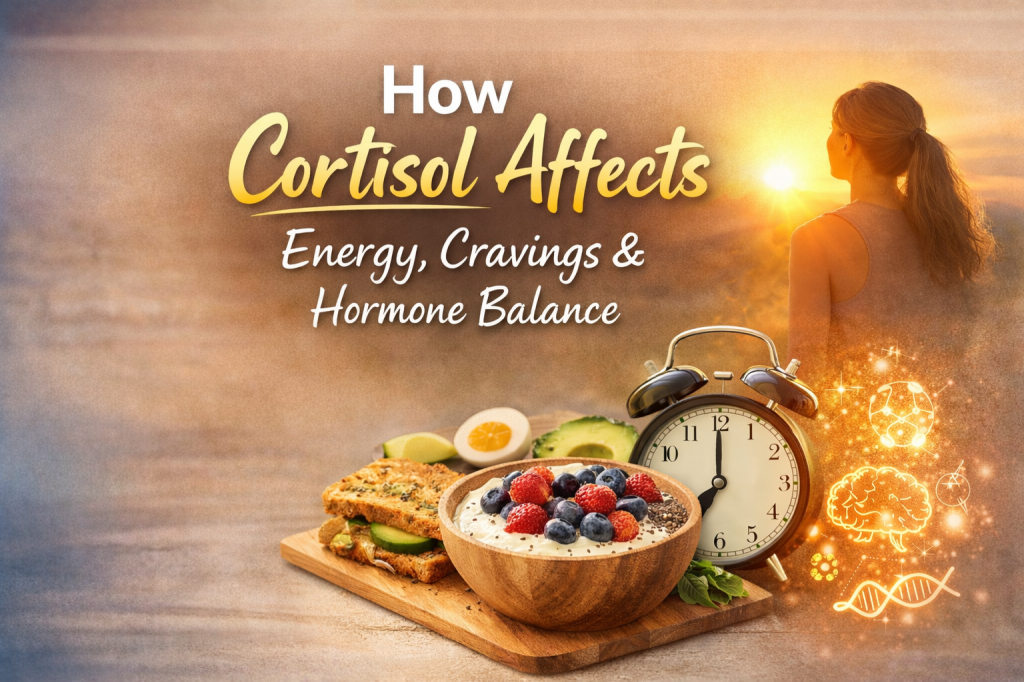
I really want to talk about hormones because understanding what’s happening inside your body makes it so much easier to support your health in a way that actually feels sustainable.
I always say that when you understand the why behind what your body is doing, it becomes so much easier to stay consistent with healthy habits.
And one of the first hormones we need to talk about is cortisol.
Cortisol Isn’t the Enemy
You’ve probably heard cortisol called the stress hormone.
And while that’s true, I think cortisol gets a bad reputation.
The truth is, cortisol is not bad.
You actually need it.
Cortisol naturally rises and falls throughout the day as part of your body’s circadian rhythm.
In the morning, cortisol should rise to help you wake up, feel alert, and get moving.
It plays an important role in:
- waking you up
- supporting energy and focus
- helping regulate blood sugar
- helping your body respond to physical and emotional stress
- supporting fat metabolism
This is why it’s normal to have higher cortisol levels in the morning.
That rise is what helps your body feel awake.
When Cortisol Gets Out of Balance
The issue is not cortisol itself.
The issue is when your body keeps pumping it out all day long.
This can happen from:
- chronic stress
- poor sleep
- overtraining
- under-eating
- skipping meals
- too much caffeine, especially before food
- nervous system dysregulation
This is when women start feeling that classic tired but wired feeling.
You may feel exhausted, but your body still can’t relax.
You may also notice:
- sugar cravings
- afternoon crashes
- anxiety
- waking up in the middle of the night
- feeling overstimulated
- difficulty losing body fat
- increased inflammation
- poor recovery from workouts
This is often where I see women get stuck.
They think they need to push harder, eat less, and train more.
But in reality, their body is already under stress.
What Balanced Cortisol Feels Like
When cortisol is functioning the way it should, it often looks like this:
✅ You wake up feeling alert
✅ You have steady energy through the day
✅ You can handle stress without spiraling
✅ You fall asleep more easily at night
✅ You recover better from workouts
✅ Cravings feel more manageable
Signs It May Be Off
When it’s out of rhythm, it can feel like:
⚡ tired but wired
🍫 craving sugar or caffeine all day
😩 moody, anxious, or overstimulated
🌙 trouble falling asleep
☕ relying on multiple cups of coffee just to function
3 Simple Ways to Support Cortisol Naturally
The good news is there are simple things you can do that make a huge difference.
1. Eat Within an Hour of Waking
This is one of the biggest ones.
A protein-rich breakfast within 60 minutes of waking helps stabilize blood sugar and tells your body that it is safe.
This helps reduce excessive cortisol spikes and supports more stable energy.
Aim for protein, fiber, and healthy fats.
Examples:
- eggs with avocado and fruit
- Greek yogurt bowl with berries and chia
- protein oats
- cottage cheese toast with fruit
2. Get Morning Sunlight
Morning sunlight is one of the best natural ways to help regulate cortisol.
Natural light exposure within 30 minutes of waking helps signal to your brain that it’s daytime.
This helps set your circadian rhythm and supports melatonin production later that night.
Typically, this helps your body naturally begin producing melatonin about 12 to 14 hours later, which supports better sleep.
3. Regulate Your Nervous System
Even 5 minutes counts.
Breathing, stretching, prayer, journaling, walking outside, or simply sitting in stillness can help signal safety to your body.
This is huge for cortisol support.
Because while you may not be able to control every stressful situation, you can support how your body responds to it.

Final Thoughts
Your body is always communicating with you.
Cravings, exhaustion, poor sleep, and feeling overwhelmed are not random.
They’re often signals that your stress response needs support.
The more you understand your body, the easier it becomes to work with it instead of against it.
If you want a head start, grab my >> Healthy Hormone Checklist <<







Leave a Reply